Did President Trump 'abandon' Taiwan?
Jan 11, 2026
Washington [US], January 11: The White House's actions in Venezuela, as well as recent statements by US President Donald Trump, have led many to question whether Washington will abandon Taiwan. Will that happen?
In a recent interview with President Trump , The New York Times asked whether, following what Trump did to Venezuela, China would take military action against Taiwan.
The message is concerning.
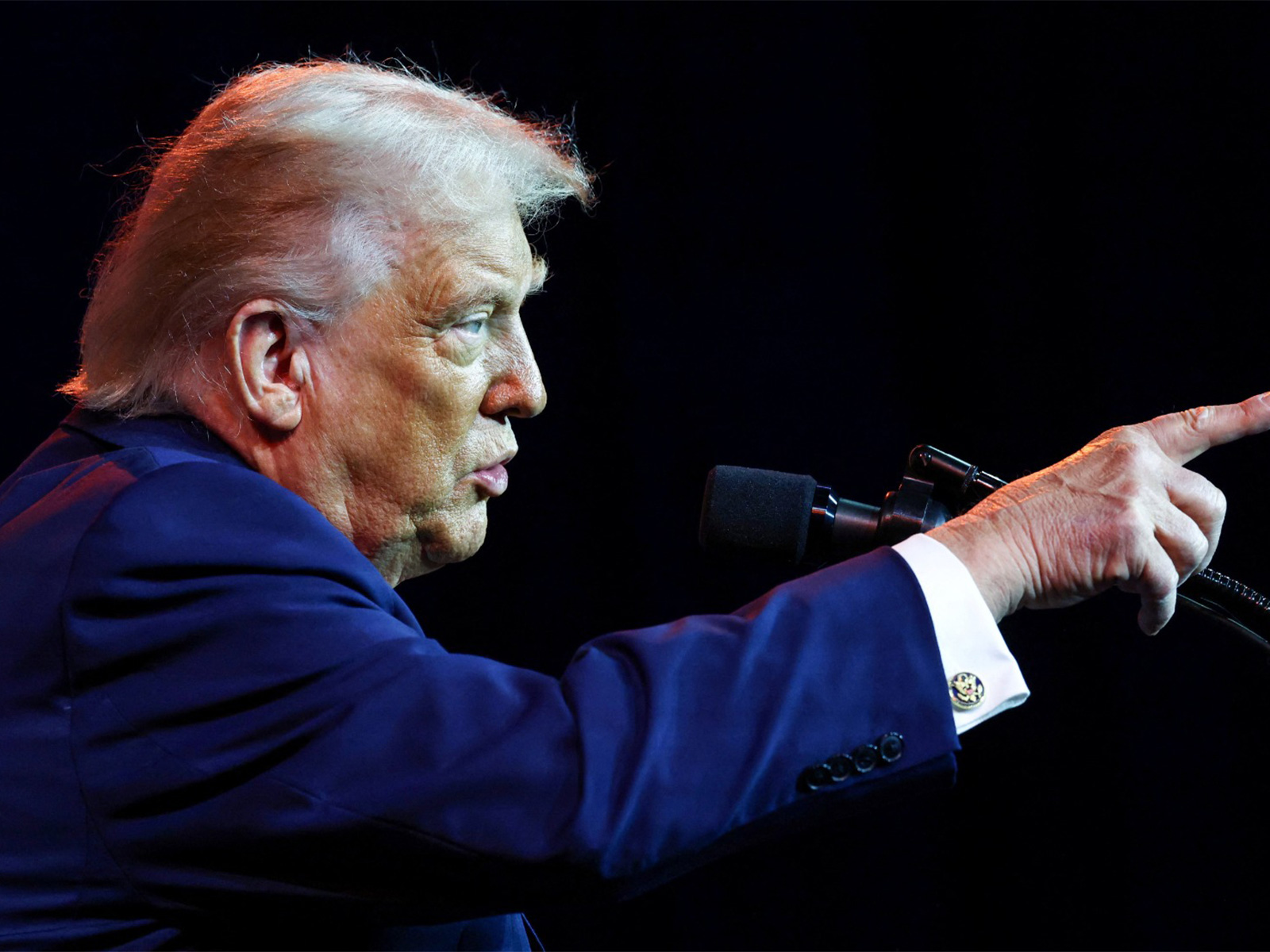
In response to the question, President Trump stated that Taiwan does not pose the same danger to China as Venezuela does to the United States. However, the White House occupant also said that how Beijing acts regarding Taiwan depends on President Xi Jinping of China.
President Trump responded: "He (Xi Jinping ) considers it ( Taiwan ) to be part of China, and that's up to him and what he does." "But I've expressed to him that I would be very unhappy if he did that (attacked Taiwan ) , and I don't think he would do that," President Trump added, emphasizing his belief that President Xi would not act in that way while he was in the White House.
In an interview with Thanh Nien newspaper on January 10th, Dr. Jack Cooper (senior expert at the American Enterprise Institute) commented: "I worry that Trump's statement implies he may not be committed to supporting Taiwan. This prompts him to test how the US responds to China's coercive actions and use of force. This doesn't necessarily mean serious 'test moves' in the coming months, as I think President Xi and President Trump are both preparing for a summit in April. However, Beijing could increase its activities over the next three years. Hopefully, this scenario doesn't happen."
The future of US policy toward Taiwan
Meanwhile, Bonnie Glaser (Director of the Indo-Pacific Program, Marshall Foundation Germany) assessed: "President Trump's recent statements on Taiwan are similar to his previous statements. He didn't use strong language when speaking about President Xi Jinping, as it seems the White House wants to maintain good relations with the Chinese leader. But Trump also wants to make it clear that he opposes the use of force against Taiwan. The recently released National Security Strategy (NSS) uses very strong language in support of Taiwan. The level of strength is much greater than in similar documents before. I think President Trump is unlikely to abandon Taiwan."
In the National Security Strategy (NSS) released in late November 2025, the White House affirmed that its top security priority is the Western Hemisphere, specifically the Americas. However, the US maintains its policy stance on the Indo-Pacific. That is, the Indo-Pacific has been, and will continue to be, one of the most important geopolitical and economic regions of the coming century. To thrive at home, the US must compete successfully in the Indo-Pacific.
The White House stated that China is the most important competitor in the region. Regarding specific strategy, the NSS outlined that U.S. diplomatic efforts should focus on pressuring allies and partners in the first island chain region to allow greater U.S. military access to their ports and other facilities, to spend more on their own defense, and most importantly, to invest in capabilities to deter aggression.
This effort will link maritime security issues along the first island chain while bolstering U.S. power and the ability of its allies to deter any attempts to seize Taiwan. Through this, Washington emphasizes the importance of Taiwan in preventing China from accessing the second island chain. The first and second island chains are concepts within the island chain strategy. Introduced in 1951, the U.S. island chain strategy outlines three island chains as three layers of encirclement and containment of the military power of both the Soviet Union and China in the Pacific.
Recently, on December 18th, the Trump administration approved the sale of an arms package worth up to $11 billion to Taiwan. This is the largest arms sale Washington has ever made to Taipei. The order includes the High Mobility Artillery Rocket System (HIMARS), howitzers, Javelin anti-tank missiles, drones, and related equipment. However, the US also raised the issue of regional allies sharing more responsibility.
Source: Thanh Nien Newspaper